Have you ever been deep on a mountain bike trail, lungs burning and legs screaming, only to fumble with a water bottle and lose your line? Or watched your energy crash on a long hike because stopping to drink felt like too much effort? That exact frustration sparked a revolution more than three decades ago.
In 1989, during the brutal heat of the Hotter ’n Hell 100 bicycle race in Texas, EMT and cyclist Michael Eidson stuffed an IV bag into a tube sock, ran a hose over his shoulder, and clamped it with a clothespin. Hands-free hydration was born—and so was CamelBak.
Today the brand is synonymous with the CamelBak water bottle, CamelBak backpack, CamelBak hydration pack, CamelBak bladder, and iconic models like the CamelBak Eddy, CamelBak Podium, CamelBak Mule, and CamelBak Hydrobak. Whether you’re hunting for a CamelBak chute mag, a lightweight CamelBak running vest, or a durable CamelBak 3L reservoir, this guide covers everything you need to choose, use, and love the gear that keeps athletes, hikers, cyclists, and even military operators moving farther.
The Origin Story: From Tube Sock to Global Standard
CamelBak didn’t start in a boardroom. It started with pure necessity. Michael Eidson’s makeshift system let him drink without taking his hands off the bars. Fellow racers noticed. Orders followed. What began as Fastrak Systems quickly became CamelBak—named for the idea of carrying water the way a camel does.
By the mid-1990s the M.U.L.E. (Multi-Use Lightweight Equipment) pack had become an icon among mountain bikers. The patented Big Bite Valve made drinking effortless. Military adoption followed, turning CamelBak into essential kit for soldiers who needed reliable hydration under extreme conditions. In 2015 Vista Outdoor acquired the company for $412.5 million; it now sits under the Revelyst umbrella while remaining headquartered in Petaluma, California.
The core mission has never changed: remove the barriers between you and peak performance by making hydration automatic.
Why CamelBak Still Dominates Hands-Free Hydration
CamelBak owns the category it invented for good reason. The systems deliver consistent high flow, taste-neutral water, easy cleaning, and bombproof durability. Key innovations include:
Crux reservoir — Delivers roughly 20–25% more water per sip than earlier designs, with a wide-mouth opening, on/off valve, and Quick Link disconnect. Available in 1.5 L, 2 L, and 3 L.
Big Bite Valve / Eddy+ bite valve — Self-sealing, high-flow, and easy to clean.
HydroGuard antimicrobial treatment that helps resist mold and bacteria.
Insulated tubes and reservoirs that keep water cooler longer.
Lifetime “Got Your Bak” warranty on most reservoirs, packs, and bottles against manufacturing defects.
These details matter when you’re hours from a refill and every sip counts.
CamelBak Product Lineup Deep Dive
Hydration Packs & Backpacks
The CamelBak hydration backpack range covers almost every activity:
CamelBak Mule / Mule Pro 14 — The legendary mountain-bike and trail workhorse. Generous cargo (often 12–14 L plus 3 L reservoir), helmet carry, tool organization, and ventilated back panels. Ideal for longer rides and day hikes.
CamelBak Hydrobak / Hydrobak Light — Minimalist 1.5 L (50 oz) pack that disappears on your back. Perfect for short rides, trail runs, or anyone who wants pure hydration without bulk.
CamelBak Octane series (Octane 10, 18, XCT, Dart) — Fast-and-light hiking and running packs with vest-style straps and smart pocket layouts.
CamelBak Arete 14 / 18 and Arete Sling — Versatile day packs and sling options for hiking or commuting.
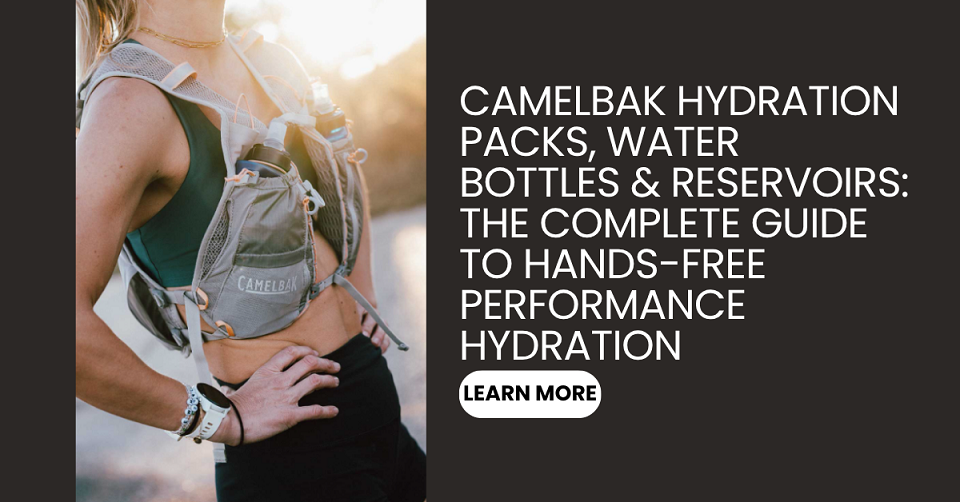
CamelBak Chase vest / Circuit vest / Ultra Pro vest / Nano vest — Running-specific hydration vests with soft flasks or Crux reservoirs. Women’s-specific fits available.
CamelBak Powderhound, Snoblast, Rim Runner, Cloud Walker — Winter and trail-focused models with extra insulation or storage.
Tactical and military lines (Hawg, Motherlode, Ambush, BFM, Thermobak) — Mil-spec Crux or Antidote reservoirs built for extreme durability.
Cargo capacities range from barely-there minimalist packs to 20+ liter day packs that still carry a full 3 L bladder.
Water Bottles
CamelBak bottles solve the daily hydration problem with equal cleverness:
CamelBak Eddy+ — The everyday hero. Bite-valve straw, spill-proof when closed, available in Tritan Renew plastic or stainless steel, often with Lifestraw filtration options. Sizes from kids’ 12–14 oz up to 32 oz.
CamelBak Chute Mag — Magnetic cap that stays out of the way while you drink. Wide mouth for ice and easy cleaning. Insulated stainless versions keep drinks cold for hours. Popular 20–32 oz sizes.
CamelBak Podium / Podium Chill / Podium Ice / Podium Dirt Series — The cyclist’s bottle. Squeeze-friendly body, self-sealing Jet Valve that locks shut, and excellent insulation on Chill and Ice models. Dirt Series adds mud-shedding lids.
CamelBak Forge Flow, Multibev, Hot Cap — Specialized options for coffee, dual beverages, or hot drinks.
Stainless steel insulated bottles across the line for temperature control and durability.
Reservoirs & Accessories
The heart of any pack is the CamelBak bladder or reservoir. Current favorites are the Crux (high-flow, easy-clean) and Fusion (zip-access versions). Capacities from 1.5 L to 3 L (50–100 oz). Accessories include insulated tubes, reservoir dryers, Quick Link kits, bite-valve replacements, soft flasks, waist belts (Ultra Belt, Flash Belt, Podium Flow Belt), and filtration systems.
How to Choose the Right CamelBak for Your Activity
Mountain biking / MTB: Mule Pro or classic Mule with 3 L Crux. Add helmet carry and tool pockets.
Hiking / day hiking: Arete, Rim Runner, or Cloud Walker with 1.5–2 L capacity plus gear space.
Trail running / racing: Chase, Circuit, Ultra Pro, or Nano vest. Soft flasks or small reservoirs keep weight low.
Road cycling: Podium Chill or Ice bottle in the cage; Hydrobak if you want a pack.
Everyday / commuting / gym: Eddy+ or Chute Mag.
Tactical / rucking / work: Mil-spec Hawg, Motherlode, or Thermobak.
Kids / family: Mini Mule or Eddy+ Kids.
Match reservoir size to outing length and climate. Hot days or long efforts favor 2–3 L. Cooler weather or shorter efforts work with 1.5 L. Always prioritize fit—women’s-specific models (Luxe, Helena, women’s Circuit/Octane) offer better torso and shoulder geometry.
Real-World Benefits and Performance Edge
Hands-free sipping means you stay in rhythm—whether pedaling technical singletrack, power-hiking a ridge, or grinding through a marathon. Studies and athlete reports consistently show better hydration equals better focus, fewer cramps, and higher output.
CamelBak systems reduce the “bottle fumble” risk that can cause crashes or lost time. The high-flow Crux and Big Bite Valve deliver more water with less effort, which matters when you’re already breathing hard. Insulation on Chill and Ice bottles (and insulated reservoirs) keeps water colder longer in summer heat.
Military and first-responder adoption proves the gear survives abuse that would destroy lesser systems. The lifetime warranty gives peace of mind most competitors cannot match.
CamelBak vs. the Competition
Osprey packs often win on pure backpack comfort and organization, especially for multi-day hiking, but many still use third-party reservoirs. Salomon and Nathan excel in pure running vests. USWE and EVOC dominate certain bike-racing niches. Yet CamelBak frequently leads in valve flow rate, reservoir ease of use, and the complete ecosystem of packs + bottles + parts.
Many riders and hikers run an Osprey or Gregory pack with a CamelBak Crux reservoir inside—the best of both worlds. For pure hydration performance and brand reliability, CamelBak remains the benchmark.
Care, Cleaning, and Longevity Tips
Empty and dry the reservoir after every use. A reservoir dryer or hanging open prevents mold.
Clean with warm water and mild soap or specialized CamelBak cleaning tablets.
Freeze the reservoir between uses for longer storage.
Replace bite valves and tubes periodically—they’re inexpensive.
For insulated bottles, avoid dishwashers if the manufacturer advises against it; hand-wash lids carefully.
Proper care turns a CamelBak into gear that lasts years, not seasons.
Trends and What’s Next
Sustainability is rising: Tritan Renew plastic, recycled fabrics, and longer product life via the warranty. Filtration partnerships (Lifestraw) expand off-grid capability. Running vests and waist belts continue to lighten up. Women-specific designs and inclusive sizing keep improving. Insulated options and soft flasks gain share as athletes demand temperature control and minimal bounce.
Key Insights & Important Takeaways
CamelBak invented and still leads the hands-free hydration category.
The Crux reservoir and Big Bite / Eddy+ valves deliver superior flow and usability.
Match the pack or bottle to the activity: Mule for MTB, Chase/Circuit for running, Podium for road, Eddy+/Chute Mag for daily life.
1.5–3 L capacity covers most needs; choose insulation for extreme temperatures.
Lifetime warranty and mil-spec durability separate CamelBak from cheaper alternatives.
Clean and dry thoroughly—longevity depends on it.
Hybrid setups (other pack + CamelBak reservoir) are common and effective.
Frequently Asked Questions
What is the best CamelBak hydration pack for hiking?
The Arete 18, Rim Runner 22, or Cloud Walker 18 balance capacity, comfort, and a reliable Crux reservoir for day hikes.
How do I clean a CamelBak bladder?
Empty, rinse with warm soapy water or cleaning tablets, use a brush for the tube, and dry completely with a dryer or by hanging open.
Is the CamelBak Eddy+ leak-proof?
Yes—when the bite valve is closed it is designed to be spill-proof for everyday carry.
What size CamelBak reservoir do I need?
1.5 L (50 oz) for short efforts or cool weather; 2–3 L (70–100 oz) for long rides, hot days, or multi-hour hikes.
Can I put a CamelBak bladder in any backpack?
Most packs with a hydration sleeve and hose port work. The Crux Quick Link makes swapping easy.
Are CamelBak bottles dishwasher safe?
Many Tritan models are top-rack safe; check the specific product. Stainless lids and valves often prefer hand washing.
What’s the difference between CamelBak Podium Chill and Podium Ice?
Both are insulated bike bottles. Ice models typically offer longer cold retention and sometimes different valve or lid features.
Does CamelBak offer a lifetime warranty?
Yes—the Got Your Bak lifetime guarantee covers manufacturing defects on most reservoirs, packs, and bottles.
Where can I buy genuine CamelBak products?
Official CamelBak site, REI, specialized bike/outdoor retailers, and authorized online sellers. Watch for sales and student/military discounts.
CamelBak vs Osprey—which is better?
Osprey often edges comfort and pack features for backpacking; CamelBak leads pure hydration performance and the complete system. Many people combine both.
Final Thoughts: Stay Hydrated, Go Farther
From a desperate tube-sock experiment on a Texas racecourse to the gold standard worn by weekend warriors and elite athletes alike, CamelBak has turned hydration into a competitive advantage. Whether you reach for a CamelBak Mule, an Eddy+, a Podium Chill, or a sleek running vest, you’re carrying decades of real-world testing and refinement.
Pick the right system for your adventures, take care of it, and you’ll spend less time thinking about water and more time enjoying the ride, the trail, or the run. Hydration isn’t just about survival—it’s about performance. CamelBak still makes that possible better than almost anyone.